Helical tieback anchors seem basic theoretically: twist all of them in, examination, lock off, done. Anyone that has actually mounted all of them on an industrial internet site knows the reality is messier. Dirt does not go through specifications, gain access to is hardly reasonable, and timetables push staffs right into shortcuts that appear later on as wall surface movement, water intrusion, or neglected examinations. After 20 years around commercial foundation stabilization as well as deep foundation repair, consisting of helical piles, resistance piles, and also micropiles, I possess an operating list of mistakes that set you back time and money. Several are actually avoidable along with a couple of regimented examinations and a straightforward read of the site.
This part surpasses generic suggestions. It pays attention to reoccuring downfalls I find in commercial helical tieback anchor installation as well as the functional means to prevent all of them, with references to surrounding systems like commercial helical pile installation as well as commercial micro pile installation when the course lugs across.
Why tiebacks fail tests long prior to they stop working the wall
Most tieback failures are tolerated when the style presumptions carry out not match field circumstances. I have observed tiebacks made for a sand lens that ended up silty sand with a perched water coating, and the crew struggled to fulfill the defined twist. The supervisor incorporated expansions and also always kept rotating, just to experience a dense gravel joint that overstressed the steel. A fell short bunch test adhered to, at that point an overdue shuffle to renovate the helices and re-drill holes via ended up inner parts pieces. None of that concerns the wall, all of it concerns reading through the ground.
Commercial helical tieback anchor installment relies on three factors that can easily certainly not be forged: precise ground information, correct support geometry for that dirt, as well as setup that adheres to the twist and also positioning criteria without improvisation struggling. If some of those three acquires risked, the test port are going to show it.
Incomplete or even stagnant subsurface data
The worst mistakes start just before use. Counting on a single boring or an aged document can be pricey. Dirt differs over quick proximities, particularly on web sites along with stuffing, electricals, or even previous remedial job. I have actually walked projects where the geotech's boring was taken 40 feets coming from the wall surface, throughout an utility trough backfilled with smashed rock. The boring showed heavy granular dirt. The wall edge was gentle clay-based fill. The concept called for two-helix layers and predicted 8 kip-ft every feet of embedment twist. The workers observed 3 to 4 kip-ft, after that hit glossy clay-based and also stalled.
If the budget plan enables, add at the very least one confirmatory boring or even a couple of palm auger probings where the tiebacks will actually go. On interior job, a 3-inch center as well as a handheld compelling conoid penetrometer can easily tell you enough to readjust the coil diameter as well as space. If you can easily certainly not include borings, emphasize a layout with emergencies: alternating coil arrangements, approximated torque arrays, and a test anchor schedule to calibrate the manufacturing plan. Gradation anchors are particularly important in split grounds or when groundwater rises and fall seasonally.
Poor coil variety for the ground regime
Every anchor installer possesses a beloved pile. That acquaintance aids efficiency, yet it may also trap you. Large-diameter helices are not regularly much better. In loose to tool sands, large plates may spin without building stress. In tight clays, way too many platters spaced too closely can latch the shaft between coil bearings and cause giving in torque.
A common oversight is using a multi-helix setup along with inadequate spacing. The rule of thumb is one to one and a half coil dimensions in between plates on the same shaft, with the top helix initially into proficient strata. In overconsolidated clay-baseds, I frequently like far fewer, bigger coils with appropriate space. In granular grounds, a sequence of a little smaller platters can easily find bearing without magnifying the steel. If the project blends clays and also sand joints, consider a sacrificial captain coil or a top segment that may be switched after an exam install.
Another inaccuracy is actually skimping on oxidation considerations when grounds are vigorous. Commercial foundation repair commonly takes place in much older cellars with high chlorides coming from defrosting salts, poor drainage, as well as changing pH. If the oxidation analysis reveals a need for thicker galvanization or a sacrificial steel allowance, carry out certainly not justify it away. Tieback anchors live where you may not view all of them. The price to upsize or specify hot-dip driven elements is commonly insignificant relative to opening up a finished area a decade later.
Misreading torque as well as the inaccurate comfort of a number
Torque correlation is a valuable device. It is certainly not a promise. The relationship aspect, Kt, varies commonly along with dirt type, coil geometry, as well as installment strategy. I have observed Kt worths coming from as low as 6 to as high as twenty in the exact same area, relying on whether the ground was actually desiccated clay-based or well-maintained sand. Treat the defined twist as proof to be confirmed through bunch screening, certainly not the only target that matters.
Two field actions misshape torque readings. First, if the anchor is certainly not straightened correctly, it can tie in the red and also make a friction spike that resembles bearing resistance. The electric motor sighes, the gauge climbs up, yet the helices are actually certainly not engaging completely in the planned dirt layer. Second, torque pubs as well as determines autumn out of gradation or know in a hurry. If you presume an incorrect high analysis, time out and recheck: withdraw a fourth twist, re-advance, and view whether torque builds gradually. An unpredictable or even sharp indication is a red flag.
On industrial work, I talk to the workers to document torque every half-foot for the last 3 to 5 feets as well as note any type of level modifications or groundwater beads on the device. The details take few seconds and give context if a verification exam underperforms. If the twist plateaued too early, the support could not be serious sufficient or even the coil set is inappropriate. Catching that before trimming makes all the difference.
Anchors positioned in the inappropriate dirt horizon
Tiebacks derive ability from the coils birthing in capable dirt past the active wedge behind the wall surface. Acquiring past that block is as much a geometric trouble as a deepness problem. A regular mistake is actually striving depth rather than casting the helix place along the genuine installation angle.
On a preserving wall, the energetic wedge may extend 0.6 H to 0.8 H responsible for the wall, relying on backfill and also drain. If you put up at a superficial slant to prevent powers, you may end up with a long support that still properties within that block. The outcome is actually a tieback that assesses well at low tons but creeps in the course of hold durations or even shows too much lock-off reductions over the first couple of weeks.
Always plot the support center on the section attracting with the block limit, energies, and also basement slabs. When open space compels a shallow slant, incorporate length as well as choose a coil configuration created for the soil beyond the block, not the general soil profile page. If the geometry is going to certainly not allow you to arrive at proficient ground without intersecting a power or easement, this is where different units like micropiles or commercial resistance pile installation can carry the lots via tensioned braces or interior walers.
Overlooking groundwater and also seasonal changes
Water is actually the quiet saboteur. Saturated dirts lessen reliable stress and, by extension, anchor ability. Powdery soils that appear stiff in overdue summer months can easily act like glossy goo in spring season. A tieback that secured off at 60 kips in Oct could creep under the very same lots the complying with April if the water table increases in to the helix zone.
Simple paychecks help. Take note water luster on spoil, check close-by septic tanks, as well as videotape the time relative to wet seasons. When suspicious, think about a conservative Kt as well as larger coils or even create a screening procedure that includes a longer carry time to observe creep. On interiors, look at temporary dewatering during setup so you can chair helices correctly. If constant higher groundwater exists, deterioration increases and so carries out the market value of seclusion sleeves near the wall surface to reduce potential seepage roads via the penetration.
Sloppy alignment and also insufficient bracing during install
The absolute best style can certainly not save a bad setup stance. Tiebacks demand positioning in 3 dimensions: proper slant to converge the bearing layer, right azimuth to stay away from energies, and also square entry that prevents eccentric filling of the wall surface link. I have actually observed crews handhold a ride scalp to thread around a pipeline. The support roamed, cut into block centers, as well as left a rugged opening. The wall layer later had to deal with jagged connect with, concentrating anxiety and also spalling masonry.
Rig up a straightforward overview frame. Even a plyboard theme along with a steel sleeve are going to keep the starter section true. For longer anchors, a midspan support near the wall surface aids avoid bending over the shaft while torque is applied. Flexing during the course of installment can easily reduce the steel's recurring capability and also turn up later as a brittle breakdown under load testing.
Underestimating wall structure components and also load move details
Tieback capacity does not live merely in the ground. The link concerns. For masonry or hollow-core wall structures, bearing platters require ample measurements and often squeezing shows off to spread load. In much older concrete, carbonation as well as rebar oxidation can create near-surface cement weaker than the initial drawings suggest. If the plate bites into soft component, you will definitely observe a test drop that resembles anchor creep however is in fact wall crushing.
Pay attention to the blockout size, embedment of any couplers or even sleeves, and also the requirement for grout behind the plate. In assertive atmospheres, point out safety hats and also sealants around the infiltration to decrease water movement. A leaky infiltration welcomes freeze-thaw harm as well as potential foundation crack repair migraines, especially in commercial basements with drywall finishes.
Skipping or abbreviating evidence and also performance testing
Time stress gets rid of excellent testing. On small jobs, the lure is actually to verification examination a sample and also proceed. That is actually unsafe when grounds differ throughout the wall surface or when support slants contrast because of utilities. A simple planning goes a very long way: verification examination every support to at least 1.25 times the concept lots, secure at peak for a minimum of 10 mins, and path motion at each increment. For essential structures, include a handful of functionality tests to 1.5 to 2.0 opportunities layout tons along with longer hold durations to assess creep.
Watch the load tissue as well as dial scale with each other. If the lots holds as well as action increases, that is actually creep. If the load goes down without substantial displacement, check out the port and gauges prior to condemning the anchor. Always keep a calmness, to-do list frame of mind. Make a note of ambient temperature level, considering that thermal results on the jack and also steel can trick brief tests.
Ignoring constructability in the layout phase
Designers in some cases point out support durations and also viewpoints that read effectively in software application but hit truth. Inside cavalcades, ductwork, and property lines restrict gear placement. On a tight metropolitan website, you might need a low-clearance drive head, shorter starter parts, and presented extensions. That slows down creation and raises the per-anchor expense. If the routine carries out not accept that, faster ways sneak in: lowered embedment, altered slants, insufficient extensions.
Bring the installer in to the discussion early. A field stroll along with the architectural designer and also geotechnical developer commonly provides smarter details: adjustable walers, alternative anchor spacing, or incorporating commercial helical pile installation underneath the slab along with a tieback body to discuss bunches. I have made use of hybrid methods where tiebacks manage sidewise while helical piles or even resistance stacks sustain verticals from indoor framing. The option could be over-stressing a solitary body to perform both jobs.
Overreliance on one system when an additional matches better
Helical tieback anchors sparkle in lots of conditions, however certainly not all. In extremely heavy gravels and also cobbles, the helices may reject prior to arriving at style intensity, as well as the twist demanded risks turning bum rap. In those soils, micropiles or drilled tiebacks might be actually extra dependable. If a sound limitation protects against percussive exploration for micropiles, you may occasionally blend approaches: utilize helical anchors where fines control and also shift to micropiles in cobble regions. Being actually rigid concerning device loyalty is actually a mistake.
Similar thinking administers when a wall requires both vertical as well as sidewise support. Commercial micropile installation may deliver tension and also compression with low vibration when the web site is sensitive. Commercial resistance pile installation works well for vertical tons transfer where there is actually inadequate overhead open space. Selecting the ideal tool is part of performing commercial foundation stabilization responsibly.
Neglecting oxidation defense and long-term maintenance
Tiebacks typically partake moist backfill with salts, fertilizers, and occasional hydrocarbon spills. Mild steel is going to experience over years. When the task counts on a long service life, define duplex defense where necessitated: hot-dip driven steel blended with epoxy finishing or grout encapsulation where codes require it. On some domestic ventures, I have actually used plastic solitude sleeves along bum rap near the wall structure to reduce galvanic coupling to inserted rebar.
If a property's routine maintenance strategy dismisses the water drainage and area situations over the anchor area, capability diminishes. Urge owners to sustain rain gutters, downspouts, and beneficial grading. A bunch of structural foundation repair starts with water, certainly not steel. It is actually unglamorous recommendations, but it protects against call-backs.
Cutting sections on documentation
The fastest pathway to issues is unstable reports. Daily logs that capture torque-depth profile pages, travel head design and gradation day, ground observations, and also evidence exam results generate a clear background. Photographes of each anchor place just before as well as after put in, consisting of the wall surface plate as well as sealer, pay dividends when a potential renter remodels and inquires what is behind the drywall.
For commercial projects along with loan providers or even public oversight, tidy documentation rates approvals as well as payouts. It likewise allows the engineer of document to readjust styles on the fly along with assurance, as opposed to halting work for a full redesign when a few gradation anchors would certainly suffice.
Overlooking the structure's worldwide behavior
Engineers occasionally analyze side restriction alone. If the wall surface desires to relocate due to worldwide settlement, a tieback is going to cooperate that account. When the slab falls as a result of soft filler, tiebacks connect a moving wall structure to a moving floor, and brand-new fractures seem in another place. In those instances, pairing tiebacks with helical piles or micropiles to re-level and support indoor beams generates a secure device. Commercial foundation repair is actually rarely a single-thread trouble. A short architectural review of bunch roads can easily record mismatches where a tieback will be asked to carry out more than resist sidewise the planet pressure.
Practical gates that prevent most problems
A team foreman the moment informed me he wanted a five-minute ritual at the start as well as end of each support. He was right. It reduced our rework price through one-half on a hectic metropolitan task. These are actually the distilled steps that matter most.
- Before install: verify position as well as azimuth with a simple jig, affirm ground desires against any sort of probing or previous supports, check twist machinery as well as disk scalp tension, as well as affirm equipment accessible matches the submittal. During put in: document twist every foot, decrease via anticipated bearing coatings, always keep bum rap supported near the wall surface, as well as cease if torque spikes erratically to re-evaluate. After put up: cut off at the proper projection, clean the bearing surface, install home plate degree, proof examination to the program along with evaluated keeps, and also seal off the penetration versus water.
Keep it basic as well as regular. The majority of business teams can apply this without altering the schedule.
When tiebacks converge along with other therapeutic work
Complex ventures hardly ever entail one trade. Basement waterproofing, utility relocations, and also interior fit-outs overlap with support work. The tieback infiltrations need control along with membranes as well as protection. If a blindside membrane is present behind a brand new wall surface, pre-plan sleeves and also tapes. Coordinate along with waterproofers on primers and sealants suitable with galvanized steel. Absolutely nothing strains client associations like a brand-new water leak outlined to an improperly sealed off anchor sleeve that cuts through a membrane.
Foundation gap fixing typically surfaces in tandem along with sidewise stabilization. Tightening a wall structure with tiebacks may shut cracks, however it performs certainly not fix them. Epoxy shot or even urethane grouting might be needed, relying on whether the gap is actually building or even simply a water path. Series issues: maintain to begin with, then restore fractures, at that point recover finishes. If negotiation added, add helical piles or even micropiles as needed to resolve the upright component.
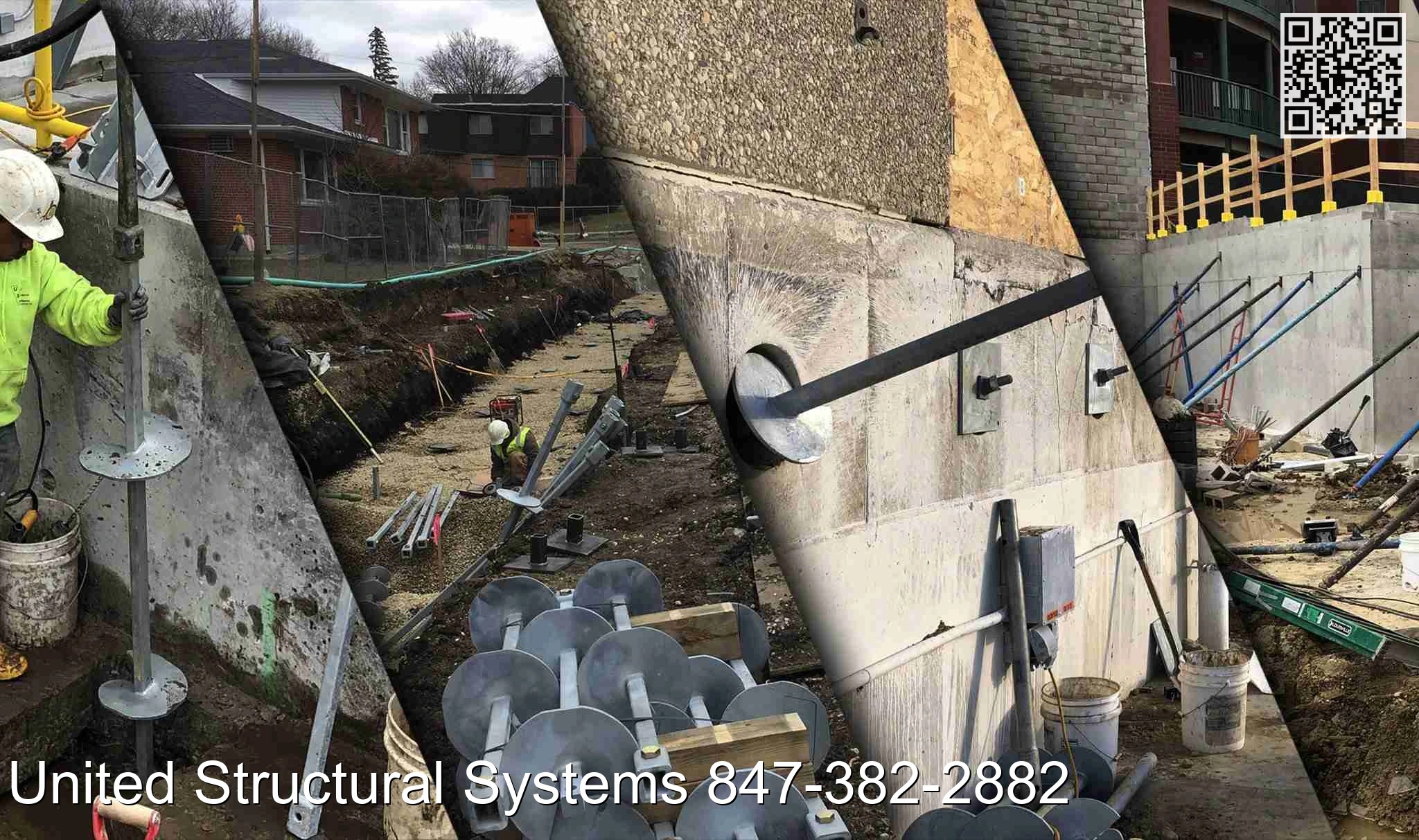
Training the workers to read the ground
Technical specifications can easily not substitute industry intuitiveness. The very best installers possess a sample of how the torque need to build and also what different soils odor and also look like. Wet, all natural fill possesses a sour odor and smears; clean sand really feels sandy as well as drowses off the tool in dry out grains. The second a staff discovers to associate these physical cues along with twist logs and also examination results, quality improves.
Invest a few hours at the beginning installing helical tieback anchors of a work to adjust. Put up a number of examination anchors, log properly, as well as collect the crew around the proof exam. Chat via what the amounts suggest. If you likewise mount helical piles, resistance stacks, or micropiles, allotment trainings around devices. The soil performs not care what the item is named. It replies to successful anxiety, water drainage, and density.
Common breakdown accounts, and also what they teach
A mid-rise vehicle parking design had actually a stooped cellar wall structure due to years of poor drainage. The concept asked for helical tiebacks along with 2 12-inch helices. The staff mounted to twist however secured off at 50 kips and also saw 2 to 3 sixteenths of an in of motion during the course of the 10-minute hold. The assumption was actually soft clay creep. The real reason was the wall structure plate bearing on a spalled concrete skin. Once our team chipped and covered the confront with a high-strength repair work mortar as well as upsized home plate through 25 percent, exams passed with low movement. Session: not all "anchor motion" remains in the ground.
On another task, a historic brick façade required tiebacks put in coming from the interior through a slender cellar passage. The driver could certainly not sustain the indicated 15-degree down angle, so he settled for near-horizontal. The supports practically reached the layout size, however the helices sat inside the energetic wedge. Within three months, horizontal fractures increased near the tieback altitude. Our experts changed the superficial supports along with a mix of deeper tiebacks as well as a handful of indoor micropiles along with a steel waler. Course: geometry beats deepness when it relates to energetic wedge avoidance.
A third instance included commercial helical pile installation on interior pillars joined tiebacks along a bearing wall. The heaps went effortlessly, yet the tiebacks coped coatings of crushed rock. Torque spiked unexpectedly, and also a ray twisted. Shifting to a punched, grouted tieback along with a little turning rig for that area conserved the timetable. Lesson: carry out certainly not force a helical solution with cobbles when a replacement is available.
Where specifications frequently mislead
Several typical specs consist of blanket torque-to-capacity connections and universal hold opportunities. They work starting aspects, not scripture. In logical dirts, creep habits matters greater than peak verification tons. In coarse-grained soils, the range is extra sensitive to efficient stress and also water drainage. If the spec performs not point out in season groundwater level improvements or even oxidation categorization, promote an addendum.
Similarly, some delegations play down equipment levels, thread being compatible, and wall structure plate monotony. If home plate bends under lots, it will definitely loosen up when you remove the jack, bring about disappointing lock-off values. A a little thicker plate or even a stiffener rib is a small change that produces expected results.
Bridging to surrounding systems without confusion
Clients usually hear a growth of phrases: helical pile, helical tieback, resistance pile, micro pile, micropiles, tieback anchors, helical anchors. In basic conditions, stacks primarily take care of upright tons, tiebacks manage sidewise loads in tension. Helical piles and also helical tiebacks discuss parts, however their geometry as well as hookups contrast. Resistance piles are hoisted in against an establishment to establish ability by edge bearing as well as abrasion, helpful when overhead is actually confined. Micropile installation involves drilled, grouted, frequently steel-reinforced components that can take strain as well as compression in difficult soils.
On commercial foundation stabilization projects, incorporating units is actually not a failure of planning, it is actually usually the indicator of an adapted option. A basement that has each side and vertical trouble may need to have helical tiebacks for the wall as well as helical piles under indoor beams. If cobbles prevail, micropiles might switch out helicals. The most intelligent teams know each body's delightful area as well as limits.
Final ideas coming from the field
Most costly errors in commercial helical tieback anchor installation track back to possible to avoid selections: relying on incomplete subsurface data, pressing a one-size-fits-all coil collection, allowing torque readings without circumstance, or even avoiding durable screening. Really good process is certainly not complicated. It is a practice. Validate the ground, choose geometry to match, install along with positioning discipline, examination in all honesty, and file thoroughly. When the website demands a various strategy, prepare to pivot to micropiles or resistance piles rather than increasing down on a having a hard time method.
Do those things regularly and tiebacks quit being a wager and also begin acting like the trustworthy resources they are for commercial foundation repair as well as structural foundation repair. The wall stays, the client stays delighted, and also you save the allocate the component of the task that appears in pictures instead of responsible for drywall.